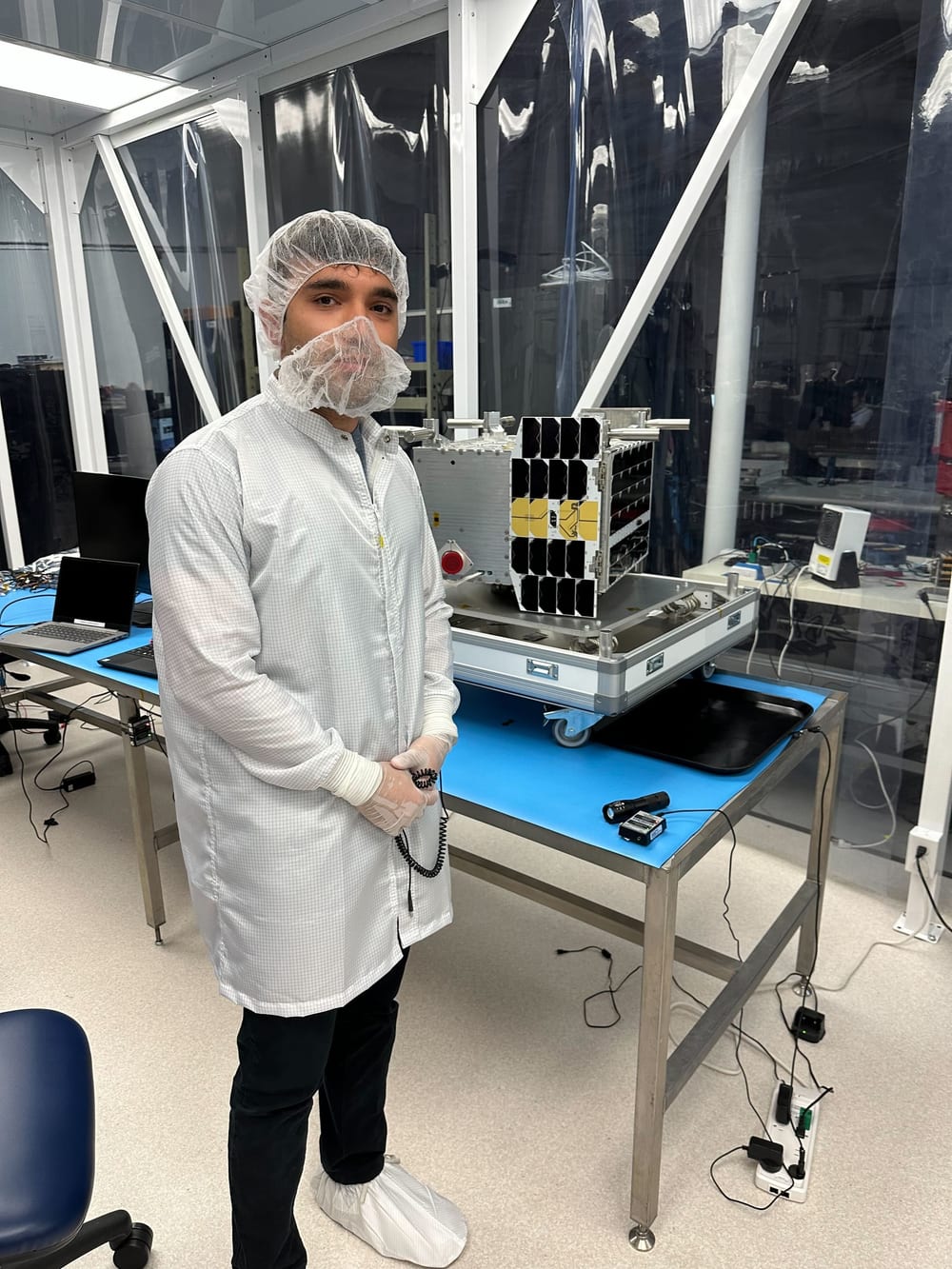
At Turion Space (2022 to 2025), we pushed the boundaries of space technology, particularly with our work on space situational awareness and orbital debris mitigation. As a Guidance, Navigation, and Control (GNC) Engineer, I developed the GNC systems and ensured the operational success of our first satellite Droid.001, launched in June 2023 on SpaceX’s Transporter-8 rideshare, and its larger successor Droid.002, launched on March 15, 2025 on SpaceX’s Transporter-13 rideshare from Vandenberg Space Force Base. This post provides a brief look at my contributions to both missions, focusing on significant moments, launch experiences, and my role in pushing the boundaries of space exploration.
The Journey of Droid.001: From Launch to Full Commissioning
Droid.001 marks a significant milestone for Turion Space as our first operational satellite, showcasing critical capabilities that pave the way for future missions. From launch to on-orbit commissioning, I was directly involved in ensuring the satellite’s success from a GNC perspective. I conducted functional testing and assessed performance metrics on the GNC hardware to ensure optimal operation and resolve technical challenges throughout the mission.
Turion Space LinkedIn post: Droid.001’s full mission, from launch to deorbit
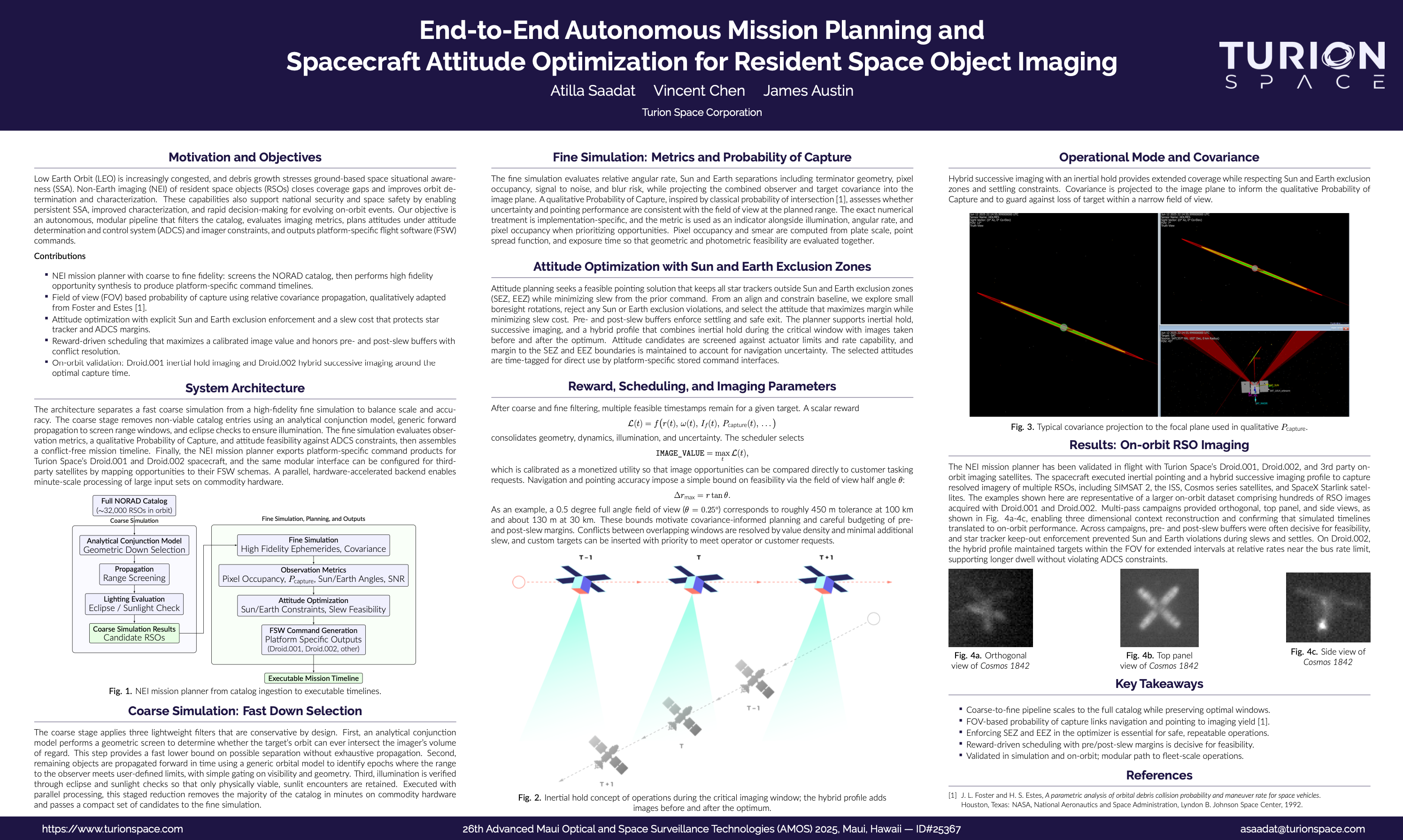
For Droid.001, I developed the Non-Earth Imaging (NEI) Optimizer, an autonomous mission-planning and attitude-optimization tool that manages the end-to-end process of imaging a Resident Space Object (RSO): target pointing, star-tracker and ADCS constraints, and ground station access. It also picks the ideal image capture time from the spacecraft’s and target’s motion, lighting conditions, imager constraints, pixel occupancy, and more, so that even fast-moving objects are captured in high quality. The NEI Optimizer flew on both Droid.001 and Droid.002 and is the subject of my AMOS 2025 paper and poster (see below). Some of the simulation pictures and videos below showcase our post-launch endeavors.
During the initial on-orbit phase of Droid.001, we encountered early challenges related to vendor ADCS issues. After a thorough first-principles engineering analysis, we were able to diagnose and correct the problems, allowing the satellite to meet its <3 arcmin (0.05 deg) pointing accuracy requirements. Below, I’ve included visualizations showing our recovery process and the GNC commissioning work, giving a glimpse into the technical complexity involved.
The automated astrodynamics and attitude control tools I developed during this phase allowed us to verify and track the performance of all GNC hardware. We performed tests on various systems, including the IMU, Gyro, and Reaction Wheels, ensuring Droid.001’s ADCS system functioned flawlessly. Additionally, our team was able to use the onboard cameras to capture stunning images of the moon, demonstrating Droid.001’s precise imaging capabilities. Though not depicted here, Droid.001 later captured consecutive images of RSOs across multiple frames and repeated target accesses, demonstrating the on-orbit success of the GNC system design, testing, and the NEI Optimizer.
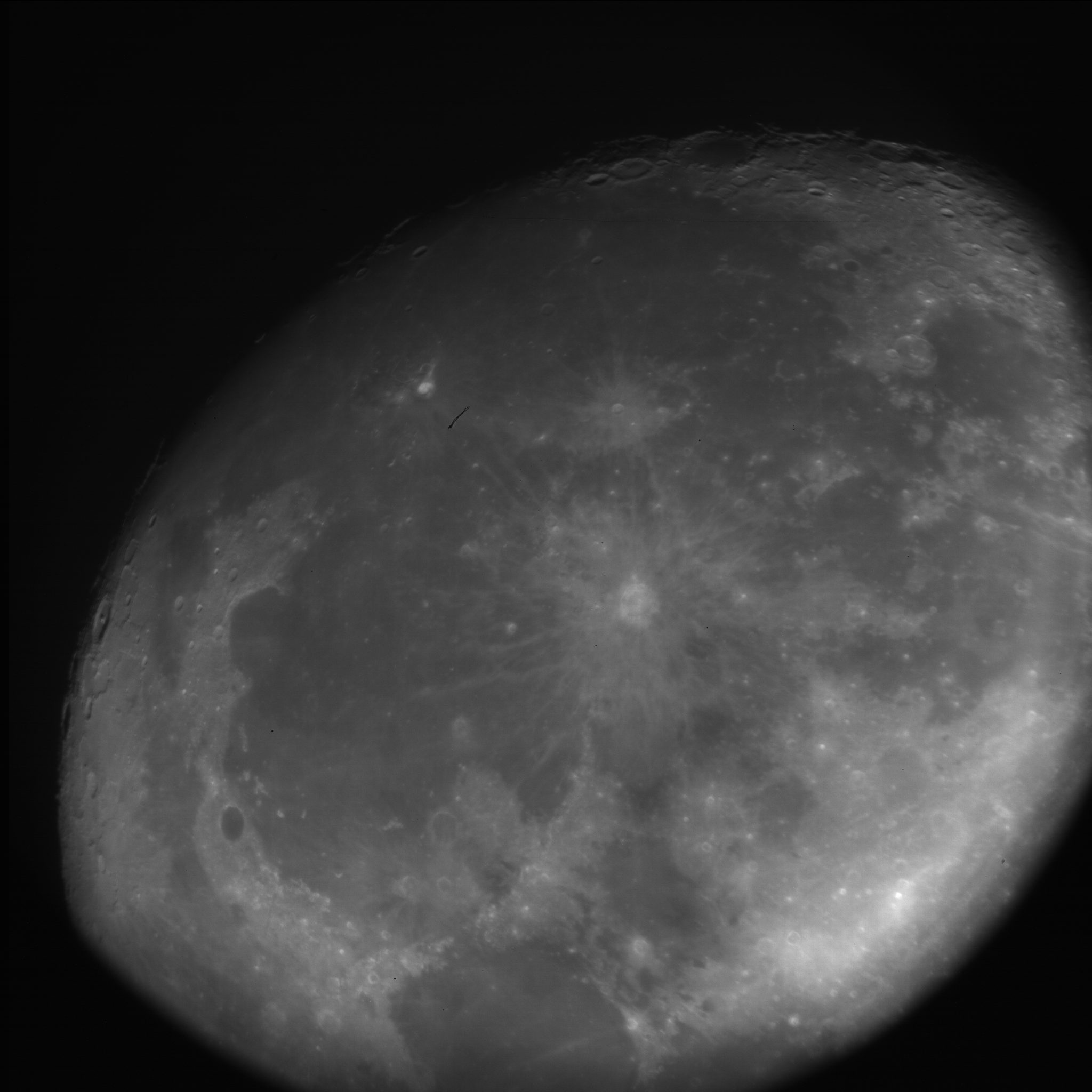
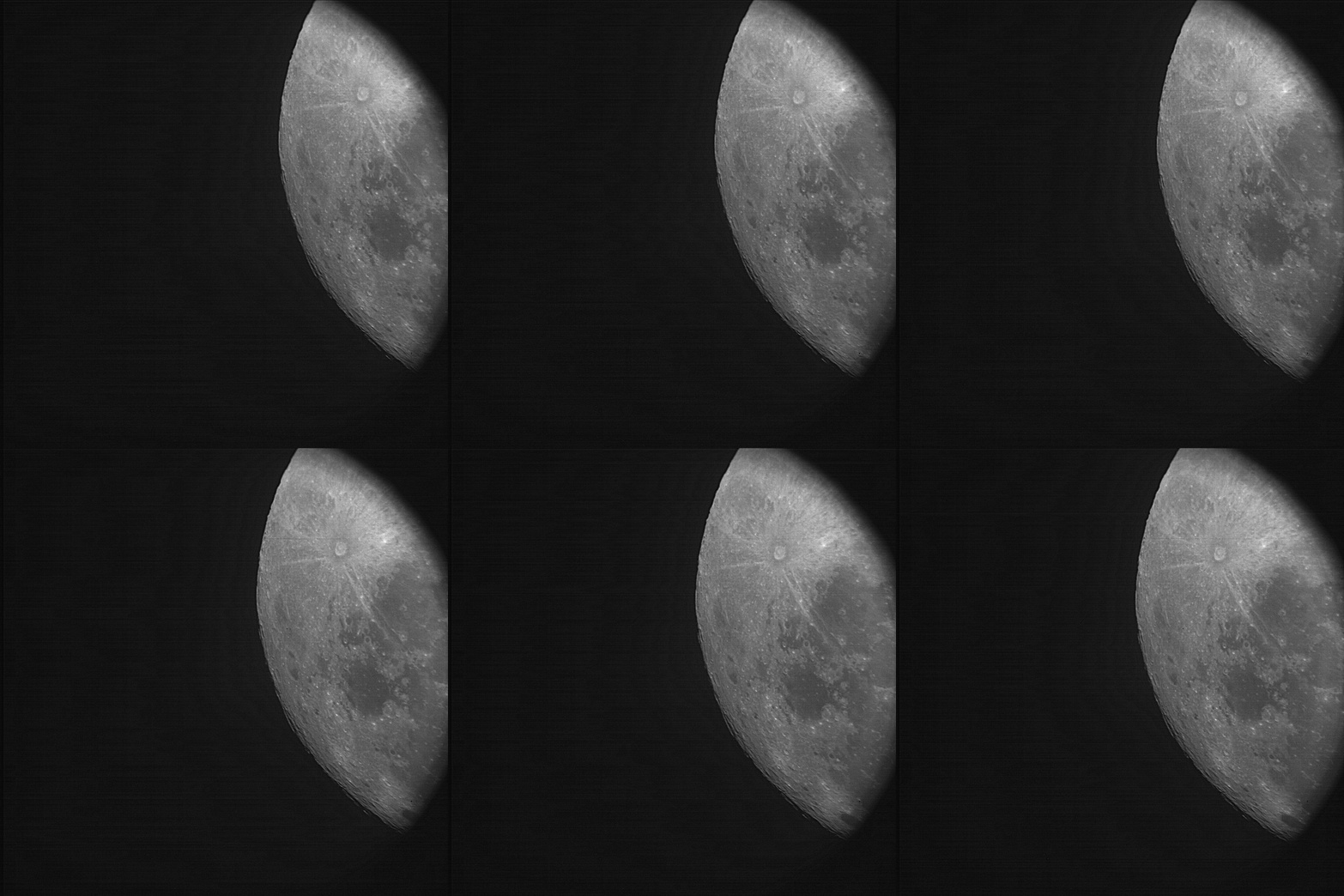
In-Situ NEI Images of the Moon taken from Droid.001
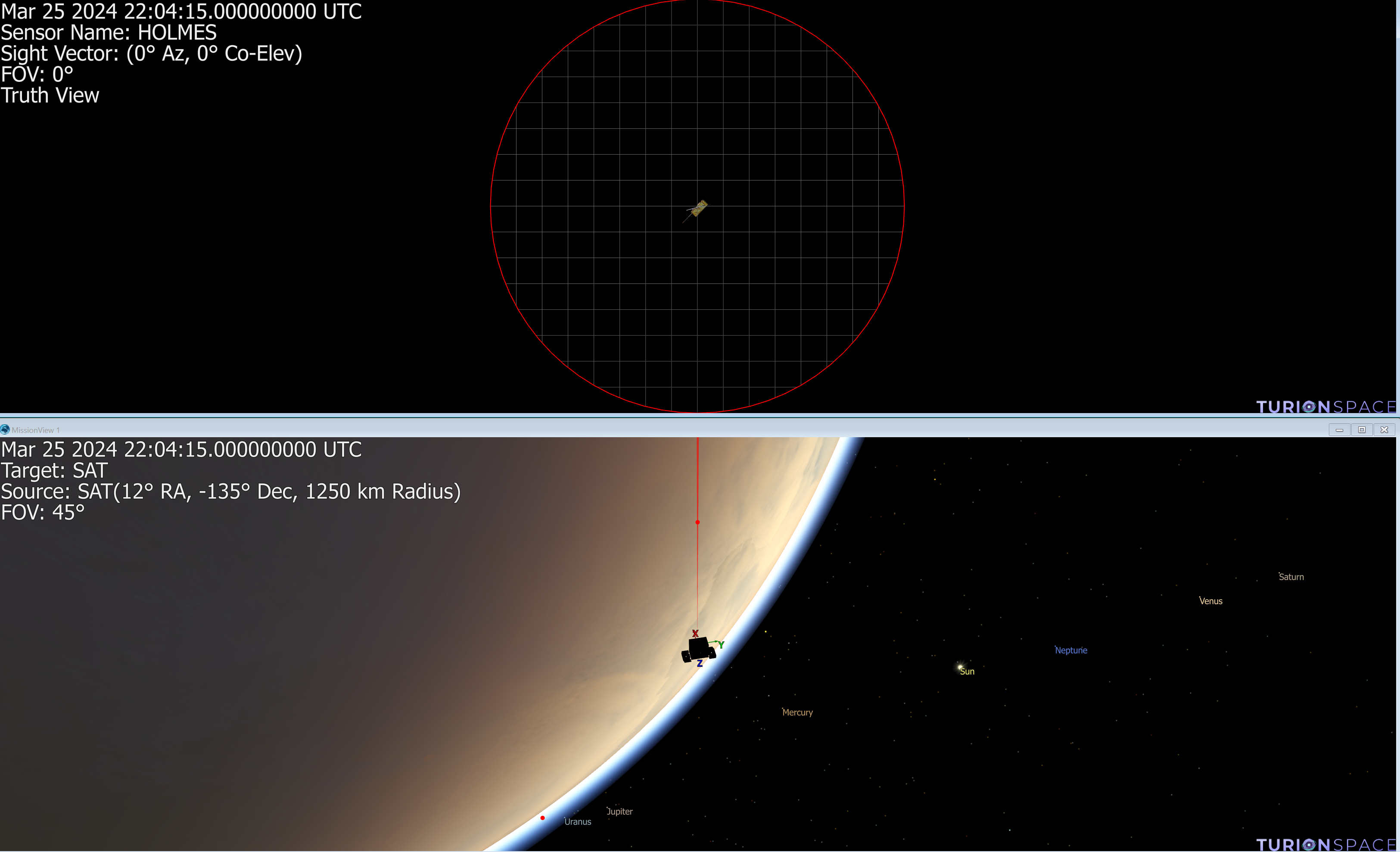
Simulation of an automated RSO imaging mission, optimized for attitude constraints and ideal image capture time
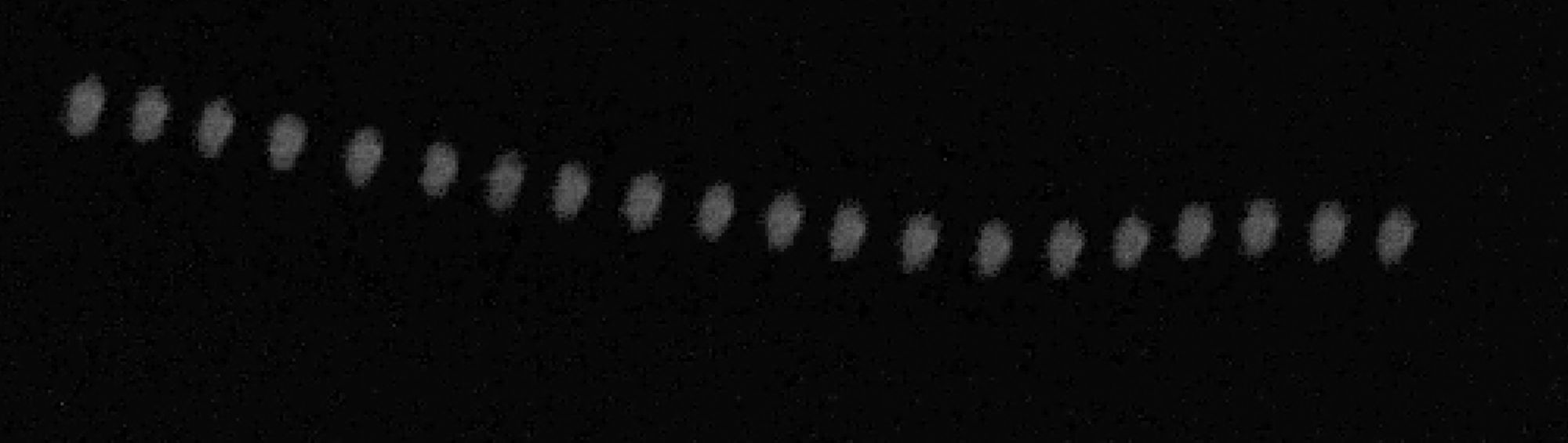
In-situ RSO image of Starfish Space’s OTTER PUP (NORAD ID: 56933) taken from Droid.001 using the NEI Optimizer (Linkedin Post), with multiple concurrent flybys
In-situ RSO image of SIMSAT2 (NORAD ID: 26366) taken from Droid.001 using the NEI Optimizer
Turion Space LinkedIn post on Payload Pioneers 2024 selection
The Next Evolution: Droid.002 and Beyond
Building on the success of Droid.001, we took the next step with Droid.002: a 90 kg spacecraft, nearly three times the mass of Droid.001, with more capable hardware, improved imaging performance, iodine-fueled electric propulsion, and new features for tracking and capturing images of RSOs. I carried its GNC system through Assembly, Integration, and Test (AIT), with tasks ranging from SITL/HITL GNC hardware testing, radiation analysis, and ΔV budgeting for station-keeping and deorbit, and then through launch and on-orbit commissioning.
Droid.002 lifted off on March 15, 2025 aboard SpaceX’s Transporter-13 rideshare mission from Vandenberg Space Force Base (SLC-4E), and is fully operational. In its first year on orbit it completed 5,561 orbits and delivered more than 42,000 frames of RSO imagery, running the NEI Optimizer that was first proven on Droid.001. The video below shows it in action, from RSO flybys to lunar imaging.
Highlighting GNC Engineering Achievements at Turion Space
AMOS 2025 Conference Paper & Poster
At the Advanced Maui Optical and Space Surveillance Technologies (AMOS) Conference 2025, I presented our work on End-to-End Autonomous Mission Planning and Spacecraft Attitude Optimization for Resident Space Object Imaging.
The paper is the formal write-up of the NEI Optimizer described above: it integrates coarse/fine simulations, probability-of-capture formulations, and attitude optimization under ADCS constraints. The framework was validated both in high-fidelity simulations and on-orbit with Droid.001 and Droid.002, demonstrating autonomous acquisition of hundreds of RSO images for orbit determination, inspection, and national security applications.
Read the full 📄 paper (PDF) or the 🖼️ poster (PDF) on ResearchGate. The poster is also shown below; click it to expand and zoom in.
Pushing the Envelope with Turion Space
With Droid.001 and Droid.002 both flown and the lessons from each feeding into the next-generation Droid fleet, Turion’s mission is to drive advancements in space situational awareness, debris orbit determination, and responsive satellite technology. Each new challenge provided an opportunity for innovation, and I’m proud of what we accomplished at Turion Space.